
If you’ve ever invested in mutual funds through an agent or a Mutual Fund distributor, you may have unknowingly paid a fee called a trail commission. While it’s a common part of mutual fund investing, many people are still unclear about what a trail commission actually means and how it affects their returns.
Let’s understand. Imagine you invest ₹10,000 in a mutual fund. Every year, a small percentage of your investment goes to the distributor who helped you invest. This ongoing payment is called a trail commission. It may look small, but over time, it can significantly impact your total returns.
In this blog, we will break down what a trail commission in a mutual fund is, how it is calculated, and how you can avoid paying extra charges.
What is the Trail Commission in a mutual fund?
To understand the trail commission's meaning, think of it as a “service fee” that mutual fund companies pay to distributors for managing your investment relationship.
In simple terms:
Trail commission in a mutual fund is a recurring fee paid by Asset Management Companies (AMCs) to distributors as long as the investor stays invested.
Unlike upfront commission (paid once), trail commission mutual funds in India work every year.
Example: If you invested through an agent, they continue earning a small percentage (say 0.5%–1%) every year from your investment value.
This is why it is also called a trail commission in MF- because it “trails” your investment over time.
How is the Trail Commission Calculated?
Now the important question: how is the trail commission calculated?
Trail commission is calculated based on the Assets Under Management (AUM), meaning the total value of your investment at a given time.
Simple explanation:
- If your investment grows, commission increases
- If your investment falls, the commission decreases
This means distributors are incentivized to keep you invested for the long term.
Example:
- Investment: ₹1,00,000
- Trail commission: 1% annually
Yearly commission = ₹1,000
If your investment grows to ₹1,50,000 next year, the commission becomes ₹1,500.
Formula to Calculate Trail Commission
To make it clearer, here is the formula to calculate the trail commission:
Trail Commission = Current Investment Value (AUM) × Trail Commission Rate
Example Calculation:
- AUM = ₹2,00,000
- Commission rate = 0.75%
Trail Commission = 2,00,000 × 0.75% = ₹1,500 per year
This formula to calculate trail commission helps you understand exactly how much you are indirectly paying.
How Much Do Trailing Commissions Cost Investors?
At first glance, what trail commissions may not seem like a big deal. But over time, they can reduce your wealth.
Let’s understand with a realistic scenario:
Example:
- Investment: ₹1,00,000
- Return: 12% annually
- Commission: 1%
Over long horizons, a 0.5%-1% higher annual cost can materially reduce final wealth because of compounding. That’s why understanding trail commission mutual funds in India is important, especially for long-term investors.
Key Impact:
- Reduces net returns
- Compounds negatively over time
- Higher in regular plans compared to direct plans
How to Avoid Trailing Commissions?
If you want to save more money and increase returns, here are some practical ways to avoid trail commission in a mutual fund:
1. Invest in Direct Plans
Direct mutual fund plans do not include distributor commissions. This can lead to higher net returns.
2. Use Online Platforms
Platforms registered with organizations like AMFI and regulated by SEBI often offer direct plan options.
3. Do Basic Research Yourself
You don’t always need an agent. Websites supported by CAMS and KFintech allow you to track and manage investments easily.
4. Ask Your Distributor
If you are investing via a Mutual Fund distributor, ask them clearly about commission charges.
5. Check Expense Ratio
Trail commission is part of the expense ratio. Lower expense ratio = better returns.
Note: The expense ratio includes management fees, operating costs and any distributor trail. Compare expense ratios between direct and regular plans before choosing.
Conclusion
Understanding the meaning of the trail commission is crucial for every investor, especially those who are just starting their investment journey.
While the trail commission in MF helps distributors earn for their services, it also reduces your returns over time. Being aware of how the trail commission is calculated and using the right strategies can help you make smarter decisions.
If your goal is long-term wealth creation, even saving 0.5%–1% annually can make a meaningful difference over time.
FAQs
Who pays the Trail commission?
Trail commission is paid by the Asset Management Company to the distributor and is recovered from the fund’s expense ratio. In regular plans, the distributor’s trail is embedded in the expense ratio; in direct plans, there is no distributor trail, so the expense ratio is lower.
What is the percentage of the trail commission?
In India, trail commission mutual funds usually range between 0.5% to 1% annually, depending on the fund and distributor.
Disclaimer: The information provided in this article is for educational and informational purposes only and should not be considered as financial or investment advice. While we strive to keep the content accurate and up to date, mutual fund investments are subject to market risks, and past performance does not guarantee future results. Readers are advised to consult a certified financial advisor or Mutual Fund distributor before making any investment decisions. The author and publisher are not responsible for any financial losses arising from the use of this information.
Related Blog


Nifty Prediction For Tomorrow Indian equities witnessed a strong bullish session, with the Nifty closing at 22,997.35, up 374.65 points (+1.66%). The index opened higher by around 48 points from the previous close and touched an intraday low of 22,637.40 during the opening minutes, before witnessing a sharp upside rally. Strong buying momentum lifted the index to an intraday high of 23,056.40, followed by mild profit booking before it closed at 22,997.35. The session reflected a notable improve
15 October 2026
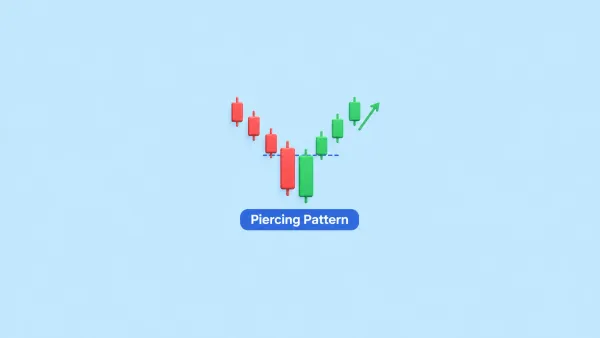
Understanding candlestick patterns can help traders study price movements and identify possible changes in market direction. One such pattern is the Piercing Pattern, which may signal a shift from selling pressure to buying pressure after a price decline. The pattern consists of two candles and is commonly used in technical analysis to identify a possible bullish reversal. However, it does not guarantee that prices will rise. Traders usually look for confirmation from the following candles, tr
14 October 2026
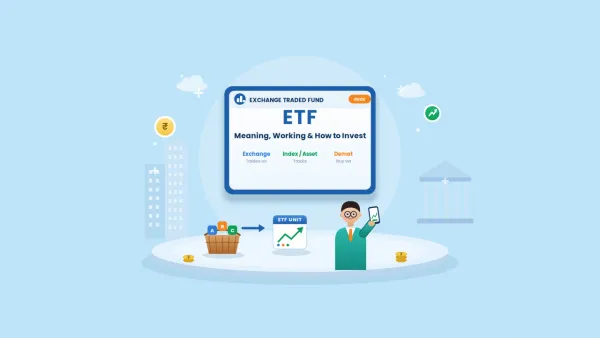
Key Takeaways * An ETF holds a basket of securities and trades on a stock exchange like a share. * Most ETFs in India are passively managed — they aim to copy an index, a commodity like gold or another benchmark, rather than try to beat it. * Returns can differ a little from the benchmark, because of expenses, cash holdings, transaction costs, portfolio adjustments and the fund’s replication method. * You need a demat and trading account to buy and sell ETF units. * ETFs are generally low-
13 October 2026
Made for Traders.
Trusted by Investors.
Download FinX — trade confidently, invest
smarter, track everything.