Find High-Yielding Corporate Bonds With Choice

Select from our collection of top-rated bond investments for stable returns

×

Type Of Bonds

Meghalaya Energy Corporation Limited

  • Coupon Rate
    11.01%
  • Rating
    ACUITE/BRACKWORK - A
  • YTM
    8.58%
  • Payment Frequency
    Quarterly
  • Maturity
    20-Dec-2030

Benefits of Investing in Bonds With Choice

Wide Selection of Bonds

Wide Selection of Bonds

Choose from 10,000+ bonds across 10+ categories to diversify your portfolio.

Expert Curated Bonds

Expert Curated Bonds

Explore our collection of AAA-rated and high-yielding investment options.

Secure Investment Platform

Secure Investment Platform

Build a solid portfolio using our intuitive and user-friendly all-in-one platform and team.

Pricing

Transparent Pricing

Easily invest in the bond market with Choice’s fair and low-cost pricing.

How To Invest in Bonds Online

Open a free online Demat account with Choice to invest or buy Bonds:

STEP 1

Register with Your Mobile No.

for quick OTP verification

STEP 2

Complete KYC Process.

by verifying your details

STEP 3

E-Sign via Aadhar

to activate your account

STEP 4

Select bonds to invest

basis of your financial goals

Offline Process to Invest in Bonds with Choice

Choice offers the option to buy and hold a variety of bonds offline:

How to trade commodity market - Choice
  • Step 1

    Get in Touch with Us

    Contact Choice Wealth to begin your bond investment journey. Our experts will guide you through the process.

  • Step 2

    Select the Right Bond

    Choose from a range of bonds, including government bonds, corporate bonds, tax-free bonds, or other options based on your financial goals and risk appetite.

  • Step 3

    Documentation Assistance

    Submit the required documents:
    - PAN Card
    - Address Proof (Aadhaar, Passport, Utility Bill, etc.)
    - Recent Passport-Sized Photograph

  • Step 4

    Application Submission

    Fill out the bond application form, which our team will assist in preparing, and submit it along with the necessary documents.

  • Step 5

    Payment of Investment Amount

    Make the payment for the selected bond via cheque, demand draft, or other accepted payment methods as instructed by the issuer.

  • Step 6

    Processing by External Parties

    We coordinate with external parties including government and corporate entities to ensure seamless processing of your bond purchase.

  • Step 7

    Receive Bond Certificate or Confirmation

    Once the investment is processed, you will receive a bond certificate or confirmation, serving as proof of your investment.

  • Step 8

    Track Your Investment

    Stay informed about interest payouts, maturity, and other details with regular updates from the issuer or through Choice Wealth’s support.

Why Invest In Bonds

When you buy bonds, you're lending money to established organisations in exchange for regular interest payments and principal returns at maturity. Bonds offer lower volatility than stocks, better returns than fixed deposits, and protection against market fluctuations. Making them reliable investment tools to secure financial stability and long-term growth.

Regular Income Stream

Regular Income Stream

Bonds provide regular fixed interest payments (coupon payments), ensuring a steady income over the life of the investment.

Investment Safety

Investment Safety

Bonds are generally considered a low-risk investment option, with the return of principal at maturity, making them ideal for conservative investors.

Low Initial Investment

Low Initial Investment

Bonds offer the opportunity to invest in small amounts, making bonds accessible to all types of investors looking for stable returns.

Favourable Risk-Reward Ratio

Favourable Risk-Reward Ratio

Investors have a chance to achieve steady returns with reduced exposure to market volatility compared to equities.

Diversification Benefits

Diversification Benefits

Adding bonds to your portfolio helps diversify risk, especially in comparison to equities, as their performance is typically less volatile.

Tax Benefits

Tax Benefits

Certain types of bonds, like tax-free municipal bonds, offer tax advantages, helping investors optimize their overall tax liability.

Essential Bond Characteristics

Face Value

Face Value

The bond's initial investment amount

Coupon Rate

Coupon Rate

Annual interest payment percentage

Maturity Date

Maturity Date

When you receive your principal back

Credit Quality

Credit Quality

Issuer's ability to repay, rated by agencies

Types of Bonds in India

Choose from multiple bond options to invest in India's growing market

Corporate Bonds

Corporate Bonds

Invest in company-issued debt for potentially higher yields and support business growth.

Tax-Free Bonds

Tax-Free Bonds

Earn tax-exempt interest income, ideal for investors in higher tax brackets.

Capital Gain Bonds

Capital Gain Bonds

Reinvest capital gains to defer taxes while earning steady returns.

REC Bonds

REC Bonds

Support rural electrification projects while securing stable, government-backed returns.

Zero-Coupon Bonds

Zero-Coupon Bonds

Buy at a discount and receive full face value at maturity, maximising long-term gains.

Perpetual Bonds

Perpetual Bonds

Enjoy regular interest payments with no maturity date, perfect for long-term income seekers.

PSU Bonds

PSU Bonds

Invest in government-backed Public Sector Undertakings for stability and consistent returns.

Sovereign Gold Bonds

Sovereign Gold Bonds

Invest in gold without physical storage concerns, backed by the Reserve Bank of India.

Bonds vs. Other Investment Options

FeatureBondsFixed DepositStocksMutual Funds
Risk LevelLow to ModerateLowHighVaries (Low to High)
Potential Returns (p.a.)7-15%5-7.5%High Variable8-12% (on average)
Min. Investment₹1,000₹1,000Price of 1 share₹500
LiquidityGoodLowHighHigh
Tax EfficiencyVaries by bond typeFully TaxableLTCG above ₹1.25 Lakh taxed at 12.5%LTCG above ₹1.25 Lakh taxed at 12.5%
Capital AppreciationLimitedNoneHigh PotentialModerate to High
Regular IncomeYes (Interest)Yes (Interest)Maybe (Dividends)Optional
*Returns vary based on bond type and market conditions. Invest wisely after understanding the risks.

Bonds FAQ

Bonds are debt instruments where you (the investor) lend money to issuers (companies or government) in exchange for regular interest payments and principal amount return at maturity.

When you buy a bond, you receive periodic interest payments (usually quarterly or semi-annual) at a fixed rate. At maturity, you get back your principal amount. Bond prices may fluctuate in the secondary market based on interest rates and market conditions.

Corporate bond yields range from 7-15%* based on credit rating and tenure. Government bonds offer 6-8%*, while tax-free bonds provide 5-7%* tax-free returns. Actual yields vary with market conditions and issuer quality.

Start investing in bonds with just ₹1,000. Different bonds may have varying minimum investment requirements, typically ranging from ₹1,000 to ₹10,000 based on the issuer and bond type.

Investment-grade bonds (rated AA and above) offer strong safety. Government and PSU bonds provide additional security through sovereign backing. Corporate bonds carry credit risk based on issuer quality, reflected in their credit ratings.

When selecting bonds, consider factors such as your investment horizon, required return rate, risk tolerance level, issuer credit rating, interest payment frequency, and tax implications.

Neither is universally better. Each serves different investment objectives. Stocks offer higher growth potential with higher risk, while bonds provide steady income with lower risk. Most balanced portfolios include both to manage risk and returns effectively.

Bond prices are calculated using factors like face value, coupon rate, yield to maturity, and time remaining until maturity. Market interest rates significantly influence bond prices – when rates rise, bond prices typically fall and vice versa.

Key risks include interest rate risk (bond prices falling when rates rise), credit risk (issuer defaulting on payments), and inflation risk (returns not keeping pace with inflation). However, these risks can be managed through careful selection and diversification.

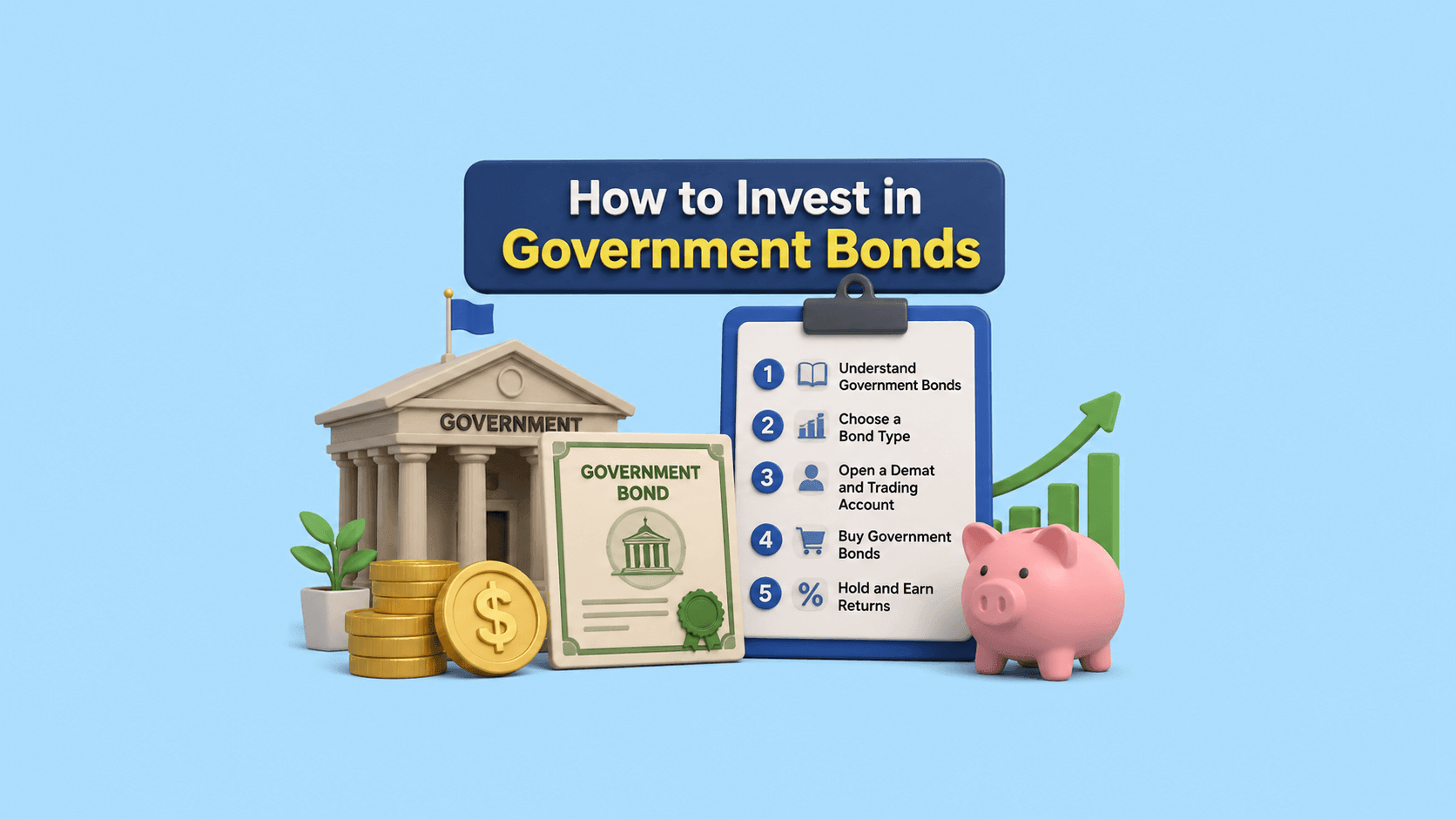
Starting your bond investment journey with Choice is straightforward:
  1. Open a Choice account online
  2. Complete your online KYC verification
  3. Browse available bonds and know their features
  4. Select suitable options as per your financial goals
  5. Invest by making a secure payment
  6. Regularly track your investments
Our platform (Choice FinX) offers a curated selection of high-quality bonds with detailed information and expert guidance.

Indian residents aged 18 and above can invest in bonds. Requirements include:
  • Valid PAN card
  • Bank account
  • Basic KYC documentation
  • Demat account for certain bonds
NRIs can also invest subject to FEMA regulations.

Bond maturity periods typically range from 1 to 15 years, with some extending to 30 years. Corporate bonds usually mature in 3-10 years, while government bonds may have longer terms. Choose based on your investment timeline.

Yes, bonds in India offer attractive benefits which include higher yields than many developed markets, strong regulatory oversight, a variety of options for different needs, and potential tax advantages. Consider bonds as part of a diversified investment strategy.

A beginner can start investing in bonds by understanding basic bond concepts, starting with high-rated bonds, investing small amounts initially, diversifying across different bonds, and consulting with financial advisors when needed.

The coupon rate is the fixed interest rate set at issuance, while the yield represents the actual return based on the current market price. For example, a bond with a 10% coupon bought below face value will have a higher yield.

Most Indian bonds pay interest quarterly or semi-annually. Payment frequency is specified in the bond documents. Some bonds, like zero-coupon bonds, pay no periodic interest but offer returns through price appreciation.

Choice protects your investments through SEBI registration and compliance, secure trading infrastructure, regular portfolio monitoring, expert risk assessment, and transparent transaction processing.

Credit ratings (AAA to D) indicate an issuer's ability to repay. Higher ratings suggest lower risk but typically offer lower yields. Ratings help investors make informed decisions based on their risk tolerance.

Yes, most bonds can be sold in the secondary market before maturity. Factors affecting the sale price include prevailing interest rates, remaining time to maturity, issuer's credit rating, and market liquidity. Trading volumes may affect the ease of sale.

The best bonds depend on your goals. For example, if safety is your prime concern, choose Government bonds, for regular income choose AAA-rated corporate bonds. If you want tax benefits, opt for tax-free bonds, for higher yield choose lower-rated corporate bonds. You can consider a mix based on your needs.

Bonds play crucial roles in retirement portfolios by providing steady income, preserving capital, reducing portfolio volatility, and offering tax-efficient returns. Allocation typically increases near retirement.