When investing in the stock market, it is important to know whether a share is fairly priced. The intrinsic value of a share helps investors estimate its actual worth based on the company's financial performance, assets and future growth potential.
Understanding this value can help investors identify potentially undervalued stocks and make informed decisions while investing in stocks.
What Is the Intrinsic Value of a Share?
The intrinsic value of a share is the estimated actual worth of a company's stock based on its financial health, earnings and future growth potential.
In simple words, it is the price an investor believes a share should be worth, regardless of its current market price.
For example, if a share is trading at ₹100 but its estimated intrinsic value is ₹150, it may be considered undervalued. However, intrinsic value is an estimate and may vary depending on the calculation method.
Intrinsic Value of a Share Formula
There are different methods for calculating intrinsic value. One commonly used method is the Discounted Cash Flow (DCF) method.
Formula:
V0=t=1nFCFt(1+r)t
Where:
- V0 = Present value of future cash flows
- FCFt = Expected cash flow
- r = Discount rate
- t = Number of years
To calculate the intrinsic value per share, divide the estimated equity value by the total number of outstanding shares.
How To Calculate Intrinsic Value of a Share?
Investors can follow these simple steps to find intrinsic value of a stock:
- Check financial performance: Review the company's revenue, profits, earnings per share and debt.
- Estimate future cash flows: Analyse the company's growth prospects and expected future earnings.
- Choose a discount rate: Consider the expected return and investment risks.
- Calculate present value: Use the DCF formula to estimate the present value of future cash flows.
- Find intrinsic value per share: Divide the estimated equity value by the total outstanding shares.
- Compare with market price: Check whether the share is undervalued, overvalued or fairly valued.
Breaking Down the Intrinsic Value by Analyst
Financial analysts use different methods for calculating intrinsic value depending on the company's business and financial performance.
| Valuation Method | What It Measures |
|---|---|
| Discounted Cash Flow (DCF) | Present value of future cash flows |
| Dividend Discount Model (DDM) | Present value of expected dividends |
| Price-to-Earnings (P/E) | Share value based on earnings |
| Asset-Based Valuation | Value of assets after deducting liabilities |
| Comparable Company Analysis | Valuation compared with similar companies |
Each method has its own advantages. Analysts often use more than one method to get a better understanding of a company's estimated worth.
Conclusion
The intrinsic value of a share helps investors understand whether a stock is trading below or above its estimated worth. It can be a useful tool for identifying investment opportunities and making informed decisions.
However, intrinsic value is not a guaranteed market price. Investors should combine valuation methods with fundamental analysis and consider the company's financial health before investing. A demat account can help investors hold and manage their shares electronically.
Related Blog
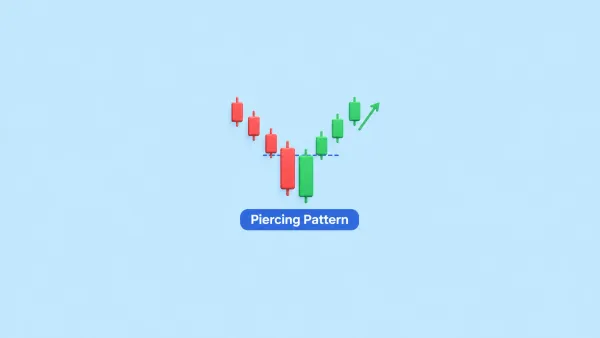

Understanding candlestick patterns can help traders study price movements and identify possible changes in market direction. One such pattern is the Piercing Pattern, which may signal a shift from selling pressure to buying pressure after a price decline. The pattern consists of two candles and is commonly used in technical analysis to identify a possible bullish reversal. However, it does not guarantee that prices will rise. Traders usually look for confirmation from the following candles, tr
14 October 2026
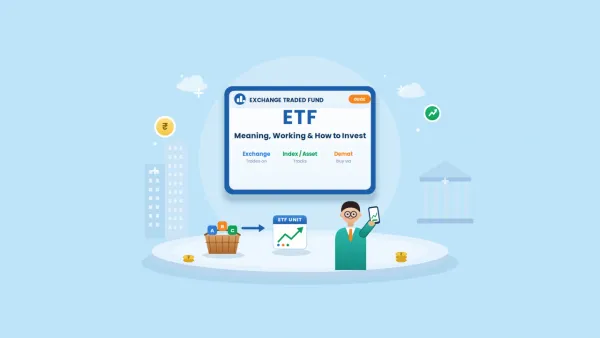
Key Takeaways * An ETF holds a basket of securities and trades on a stock exchange like a share. * Most ETFs in India are passively managed — they aim to copy an index, a commodity like gold or another benchmark, rather than try to beat it. * Returns can differ a little from the benchmark, because of expenses, cash holdings, transaction costs, portfolio adjustments and the fund’s replication method. * You need a demat and trading account to buy and sell ETF units. * ETFs are generally low-
13 October 2026
Made for Traders.
Trusted by Investors.
Download FinX — trade confidently, invest
smarter, track everything.