

Aluminium prices fell around 3.50% in a day as expectations of resumed exports from the Persian Gulf improved market sentiment following reports of a US-Iran agreement to end hostilities and reopen the Strait of Hormuz. Lower oil prices eased inflation concerns and supported risk appetite across industrial metals. However, supply-side risks remain elevated as Gulf smelters continue to face operational disruptions, with EGA and ALBA still below normal production levels. Additional concerns stem from Guinea's tighter bauxite export restrictions and Norsk Hydro's force majeure declaration on Qatar aluminium. Meanwhile, Japanese aluminium inventories declined, while China's aluminium exports rose 5.68% in May, reflecting stronger export availability.
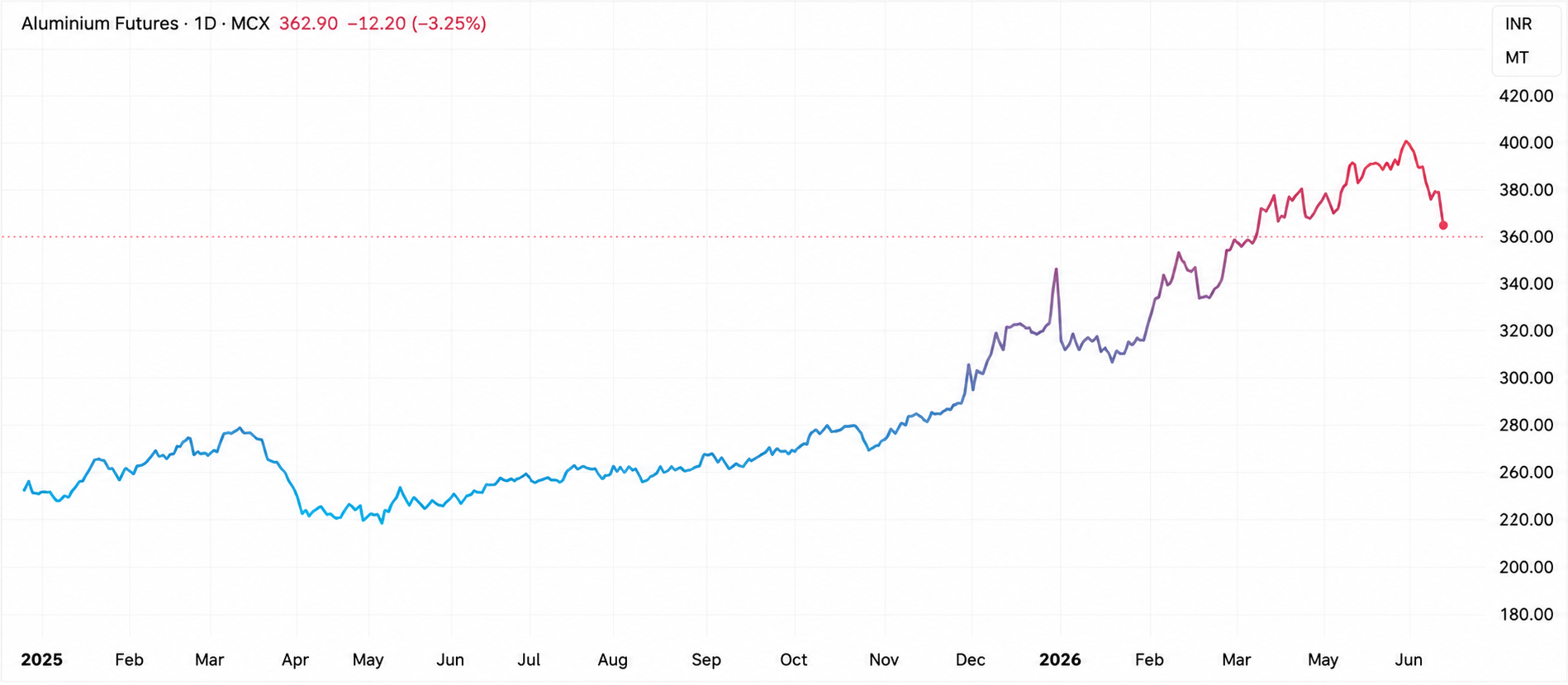
Major Highlights
- Aluminium prices dropped around 3% in a single day.
- US-Iran agreement expected to reopen the Strait of Hormuz.
- Oil prices fell to a two-month low, reducing inflation concerns.
- China's aluminium exports increased 5.68% to 632,000 tonnes.
- Gulf aluminium output fell 26.7% m/m in April.
- Guinea's bauxite export restrictions continue to tighten raw material supply.
- Japanese port inventories declined to 238,900 tonnes in May.
- Norsk Hydro declared force majeure on Qatar aluminium.
Near-term aluminium prices may remain under pressure due to easing geopolitical tensions and expectations of improved Gulf exports. However, persistent supply disruptions, low inventories, and raw material constraints are likely to limit downside, suggesting prices could stabilize after the recent sharp decline.
Related Blog


FII DII Data Today 14th August 2026 CATEGORY DATE BUY VALUE (₹ Crores) SELL VALUE (₹ Crores) NET VALUE (₹ Crores) DII 14-Aug-2026 12,799.58 10,723.16 2,076.42 FII 14-Aug-2026 13,122.45 13,789.57 -667.12 What are FII and DII in the Stock Market Foreign Institutional Investors (FIIs) invest in the Indian stock market from international markets, while Domestic Institutional Investors (DIIs) include mutual funds and institutional bodies operating from India. fii dii data helps track
13 August 2026

Nifty Prediction For Tomorrow The Nifty 50 tomorrow market prediction indicates a Sideways to Bullish trend. The range is between 24200 and 24550, with support at 24200-24250 and resistance at 24500-24550. Traders should monitor these crucial levels closely for potential market shifts. Nifty 50 Share Price * Nifty Support: 24200-24250 * Nifty Resistance: 24500-24550 * BIAS: Sideways Nifty Range 24200 24550 Indian indices witnessed a volatile session, with Nifty opening on a re
13 August 2026

Nifty Prediction Today Today, Nifty 50 prediction suggests a Sideways to Bullish range between 24200 and 24550, with strong support at 24200-24250 and resistance at 24500-24550 Traders should monitor these crucial levels closely for potential market shifts. Nifty Support and Resistance Level Today * Nifty Support: 24200-24250 * Nifty Resistance: 24500-24550 * BIAS: Sideways Nifty Range 24200 24550 Indian indices witnessed a volatile session, with Nifty opening on a relatively f
13 August 2026
Made for Traders.
Trusted by Investors.
Download FinX — trade confidently, invest
smarter, track everything.