

When buying or selling a stock, you may notice that the buying price and selling price are not the same. This difference is known as the bid-ask spread, and it can affect the cost of your trades.
Understanding the bid-ask spread's meaning is important because it influences the price at which you buy and sell securities. Whether you invest in stocks, ETFs, or derivatives, the spread can impact your overall returns, particularly if you trade frequently.
In this article, we'll explore what is bid ask spread, how it is calculated, why it matters, and how traders can minimise its impact on their trading decisions.
What Is the Bid-Ask Spread?
The bid-ask spread is the difference between the highest price a buyer is willing to pay for a security and the lowest price a seller is willing to accept. It represents the gap between demand and supply in the market at a given point in time.
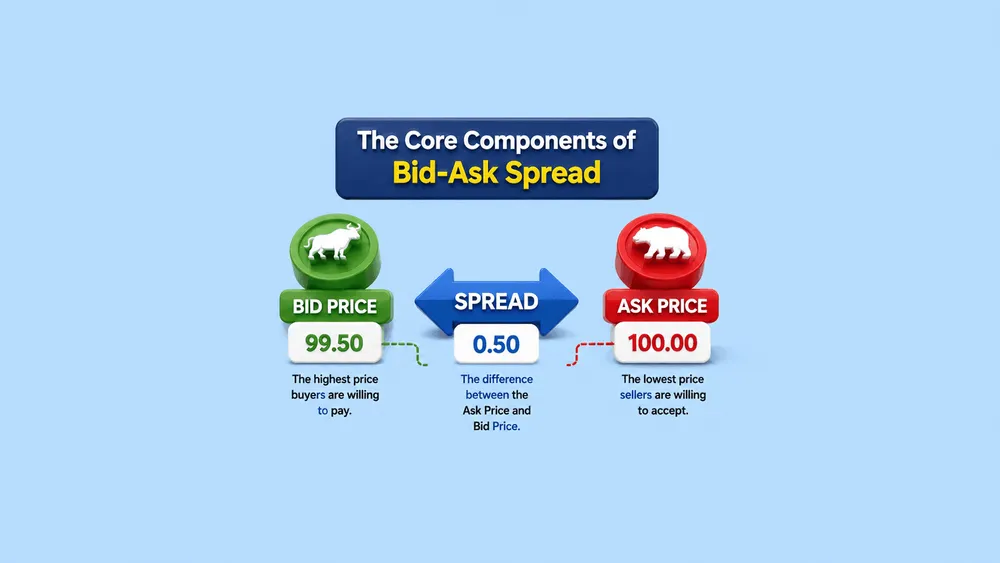
To understand the bid-ask spread meaning, it is important to know its two components. The bid price is the highest price that buyers are willing to pay, while the ask price is the lowest price at which sellers are willing to sell. The difference between these two prices is known as the bid and ask spread.
The bid-ask spread means more than just a price difference. It serves as an indicator of market liquidity and trading activity. Generally, securities with higher trading volumes tend to have narrower spreads, while those with lower trading activity often have wider spreads. As a result, understanding what is bid ask spread can help investors assess trading costs and the ease of buying or selling a security in the market.
The Core Components of Bid-Ask Spread
To understand the bid-ask spread, it is important to know the two prices that create it: the bid price and the ask price. These prices reflect the interaction between buyers and sellers in the market and help determine the current market value of a security.
Bid Price
The bid price is the highest price that a buyer is willing to pay for a security at a given time. It represents the demand side of the market and indicates what buyers believe the security is worth. When an investor places a buy order, it contributes to the pool of bids available in the market.
Ask Price
The ask price, also known as the offer price, is the lowest price at which a seller is willing to sell a security. It represents the supply side of the market and reflects the minimum amount sellers are prepared to accept for their shares.
Spread
The bid-ask spread is the difference between the bid price and the ask price. This difference exists because buyers generally seek lower prices while sellers aim for higher prices. The spread acts as a measure of market liquidity and trading activity. In general, a narrow spread indicates higher liquidity and active participation, while a wider spread may suggest lower trading activity or greater market uncertainty.
How to Read Bid-Ask Spread
Many beginners see bid and ask prices on their trading apps but are unsure how to interpret them.
Let's consider the following market data:
- Bid Price: ₹1,250
- Bid Quantity: 800 shares
- Ask Price: ₹1,253
- Ask Quantity: 600 shares
This means buyers are willing to purchase the stock at ₹1,250, while sellers are willing to sell it at ₹1,253.
The bid-ask spread here is:
₹1,253 − ₹1,250 = ₹3
If you place a market buy order, your trade is likely to execute near ₹1,253.
If you place a market sell order, your trade is likely to execute near ₹1,250.
Understanding how to read bid-ask spread data helps investors estimate the actual cost of entering and exiting a position.
Bid-Ask Percentage Spread Formula and Example
While the spread can be expressed in rupees, traders often compare spreads using percentages.
The bid-ask percentage spread formula is:
Bid Ask Percentage Spread = ((Ask Price − Bid Price) ÷ Mid Price) × 100
Where:
Mid Price = (Bid Price + Ask Price) ÷ 2
Example
Suppose a stock has:
- Bid Price = ₹495
- Ask Price = ₹505
Step 1: Calculate the Mid Price
Mid Price = (495 + 505) ÷ 2 = ₹500
Step 2: Calculate the Spread
Spread = ₹505 − ₹495 = ₹10
Step 3: Apply the Formula
Bid Ask Percentage Spread = (10 ÷ 500) × 100 = 2%
This bid-ask spread example shows that the spread equals 2% of the stock's average market price.
Using the bid-ask percentage spread formula allows investors to compare trading costs across stocks with different price levels.
Importance of Bid-Ask Spread
The importance of bid-ask spread extends beyond simply measuring the difference between buying and selling prices.
First, it acts as an indicator of market liquidity. Stocks with active trading generally have smaller spreads because there are many buyers and sellers participating in the market.
Second, the spread directly affects transaction costs. Every trader effectively pays the spread when entering and exiting a position.
Third, it can provide insights into market sentiment. During periods of uncertainty or high volatility, spreads often widen because market participants become more cautious.
Fourth, the spread helps investors identify securities that may be difficult to trade. A very wide spread can indicate lower liquidity and potentially higher trading costs.
For retail investors, understanding the importance of bid-ask spread can help improve trade execution and reduce unnecessary costs.
Factors Affecting Bid-Ask Spread
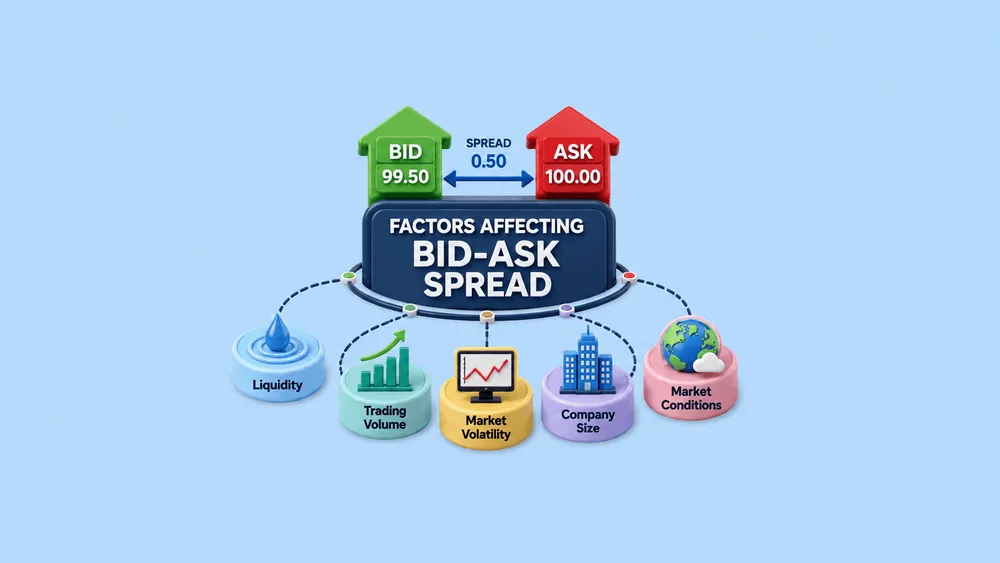
Several factors influence the size of a spread.
Liquidity-
Liquidity plays a major role in determining spreads. Large-cap stocks with active trading usually have narrow spreads, while stocks with limited trading activity often have wider spreads.
Trading Volume-
Higher trading volume generally leads to smaller spreads because more buyers and sellers compete to execute trades.
Market Volatility-
During major events such as RBI policy announcements, corporate earnings releases, or global economic developments, uncertainty can increase, causing spreads to widen.
Company Size-
Shares of large, established companies often have tighter spreads compared to small-cap companies due to greater investor participation.
Market Conditions-
Spreads may become wider during market opening and closing hours when price movements are often more volatile.
How Bid-Ask Spread Affects Buying and Selling Price
The spread directly influences how much you pay when buying and how much you receive when selling.
Suppose a stock has:
- Bid Price = ₹300
- Ask Price = ₹304
If you buy immediately, you may pay ₹304. If you sell immediately after without any change in market price, you may receive only ₹300.
This creates an immediate difference of ₹4 per share.
For example, if you purchase 1,000 shares, the spread alone represents a cost of ₹4,000. This is why traders often pay close attention to spreads before entering positions.
How the Spread Affects Your Trading
The bid ask spread can affect your trading costs and overall returns. Active traders, such as intraday and options traders, are generally more impacted because they enter and exit positions frequently. Long-term investors may be less affected, but wider spreads can still influence the price at which they buy or sell securities.
Tips to Minimise the Impact of Bid-Ask Spread
Investors can reduce the impact of the bid ask spread by focusing on highly liquid securities and using limit orders to gain better control over trade execution prices.
Additionally, monitoring market conditions and avoiding low-volume securities can help lower trading costs and improve overall trading efficiency.
Conclusion
Understanding what the bid-ask spread is can help investors make more informed trading decisions. The bid-ask spread's meaning extends beyond a simple price difference, as it reflects market liquidity, trading activity, and transaction costs.
By learning how to read bid-ask spread data and understanding its impact, investors can better manage trading costs and improve execution. Using limit orders, focusing on liquid securities, and monitoring market conditions can help minimise the effect of spreads and support more efficient trading.
FAQs
What is a good bid-ask spread?
A good bid-ask spread is generally a narrow spread that indicates high liquidity and active market participation. Large-cap stocks typically have tighter spreads than low-volume stocks.
How is bid-ask spread calculated?
The bid-ask spread is calculated by subtracting the bid price from the ask price.
Bid Ask Spread = Ask Price − Bid Price
Why is the ask price higher than the bid?
The ask price is higher because sellers want the highest possible price, while buyers seek the lowest possible price. The difference between these two prices creates the spread.
What is the difference between bid-ask spread and slippage?
The bid-ask spread is the difference between the current buying and selling prices. Slippage occurs when a trade is executed at a price different from the expected price due to market movement or limited liquidity.
How can traders reduce the impact of bid-ask spread?
Traders can reduce the impact of bid-ask spread by trading liquid securities, using limit orders, avoiding highly volatile periods, monitoring the average bid-ask spread, and focusing on stocks with strong trading volumes.
Disclaimer: Investments in securities markets are subject to market risks. The information provided is for educational purposes only and should not be considered investment advice. Investors should conduct their own research or consult a financial advisor before making investment decisions.
Related Blog


Nifty Prediction For Tomorrow Indian equities remained under pressure on 21 October, with the Nifty closing at 22,811.35, down 77.60 points (-0.34%), marking its second consecutive session of decline. The index opened higher at 23,016, a gap-up of around 127 points, and initially advanced to an intraday high of 23,120.90 within the first half-hour. However, selling pressure emerged soon after the early rise and dragged the index down to an intraday low of 22,649.90. A late recovery helped the i
20 October 2026

The overall month has been quite unpredictable. While many on the chart stood strong, most of them have slipped. Bank Nifty on the other hand maintained its grip for a long time but now appears slightly bearish. Let’s see what the coming month holds for the investors as Mr. Sumeet Bagadia, Executive Director of Choice takes us through the weekly predictions of the market. Nifty Prediction For Next Week (19th October - 23th October 2026) The Nifty index started the week at 22,593.20, opening a
16 October 2026
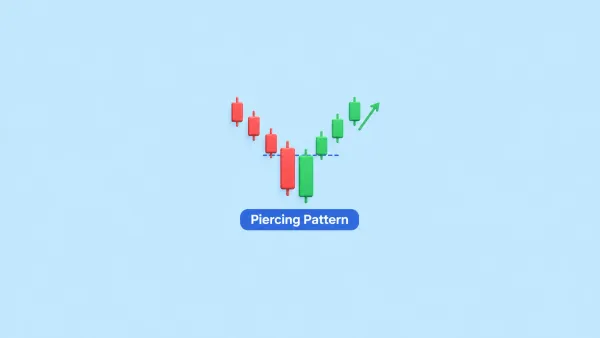
Understanding candlestick patterns can help traders study price movements and identify possible changes in market direction. One such pattern is the Piercing Pattern, which may signal a shift from selling pressure to buying pressure after a price decline. The pattern consists of two candles and is commonly used in technical analysis to identify a possible bullish reversal. However, it does not guarantee that prices will rise. Traders usually look for confirmation from the following candles, tr
14 October 2026
Made for Traders.
Trusted by Investors.
Download FinX — trade confidently, invest
smarter, track everything.
Table of Contents
