
If you have started exploring mutual funds or the stock market, you’ve probably heard terms like large cap, mid cap, and small cap again and again. For many beginners, these words sound technical, but in reality, they simply describe the size and stability of the companies you invest in.
In this blog, let’s clearly understand the meanings of large cap, mid cap, and small cap; the differences between them; and how to choose the right one in India.
Understanding Market Capitalization
Market capitalization refers to the total market value of a company’s shares that are held by its shareholders. In simple terms, it represents how much a company is worth in the stock market.
It is calculated by multiplying the total number of outstanding shares of a company by the current market price of one share. This total value is commonly known as the company’s “market cap.”
Companies are broadly classified into three categories based on market capitalization:
- Large-Cap
- Mid-Cap
- Small-Cap
But what exactly are large cap, mid cap, and small cap companies, and how do they differ from each other?
In 2017, the Securities and Exchange Board of India (SEBI) introduced specific guidelines to categorize listed companies according to their market capitalization. These regulations brought uniformity and clarity to the classification system.
Let’s now understand these three categories and the key differences between them in detail.
What Is Large Cap Fund?
Large Cap companies are the biggest and most established companies in the market. They have a high market capitalization, strong brand presence, and a long track record of performance.
A Large Cap fund is a mutual fund that invests primarily in top-ranking companies (usually the top 100 companies by market capitalization in India). These companies are often industry leaders, like major banks, IT giants, and FMGC leaders.
Key features of Large Cap funds
- Invest in well-established companies
- Lower risk compared to mid and small caps
- More stable returns
- Ideal for conservative investors
- Suitable for long-term wealth building with less volatility
Large Cap funds may not give explosive short-term returns, but they provide consistency and relative safety during market downturns.
What Is Mid Cap Fund?
Mid cap companies are those that fall between large and small companies in terms of size. They are usually ranked between 101 and 250 in market capitalization.
A mid cap fund invests in these growing companies that have the potential to become future Large Cap leaders. They are in growth phase, expanding operations, increasing profits, and capturing market share.
Key features of mid cap funds
- Moderate risk and moderate reward
- Higher growth potential than large caps
- More volatility than large caps
- Suitable for investors with a medium-to-high risk appetite
- Good for long-term investment horizons
Mid-cap funds balance growth and stability, making them attractive for investors seeking better returns without going into extreme risk territory.
What Is Small Cap Fund?
Small cap companies are ranked 251 and beyond in market capitalization. These are smaller, emerging businesses that are still developing their market presence.
A small cap fund invests in these companies with high growth potential. However, with high potential comes higher risk.
Key features of small cap funds
- High risk, high reward
- Very volatile in the short term
- Potential for significant long-term returns
- Suitable for aggressive investors
- Best for long investment horizons (7-10+ years)
Small cap funds can multiply wealth over time, but they require patience and emotional discipline.
The Difference Between Large Cap, Mid Cap, and Small Cap
| Feature | Large Cap | Mid-Cap | Small-Cap |
|---|---|---|---|
| Risk Level | Lowest risk; top 100 companies, financially strong | Moderate risk; ranked 101–250, growing firms | Highest risk; ranked 251+, smaller/emerging firms |
| Volatility & Liquidity | Stable, highly liquid | Moderate volatility, reasonable liquidity | Highly volatile, lower liquidity |
| Returns (5-year avg.) | ~7% steady returns | ~10.3% higher growth | ~14.7% highest returns |
| Suitable For | Conservative investors seeking stability | Moderately risk-tolerant investors | Aggressive investors with high risk appetite |
| Growth Potential | Predictable, stable growth | Moderate growth; potential to become Large Cap | Highest growth potential but uncertain |
Factors to Consider Before Choosing Large Cap, Mid Cap, and Small Cap in India
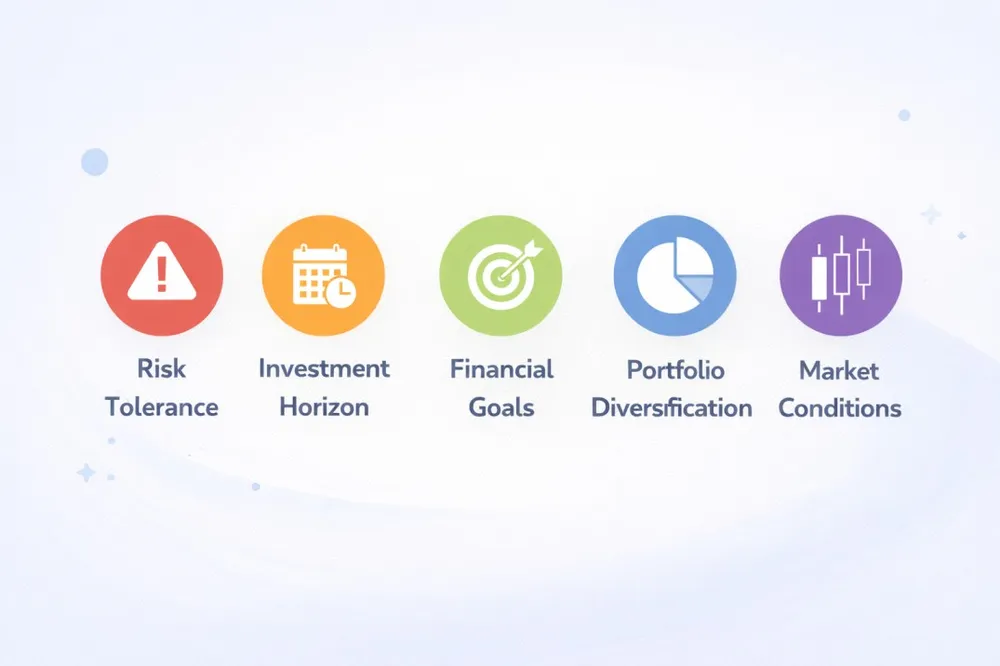
Choosing among Large Cap, mid cap, and small cap India funds should not be random. Consider these factors:
1) Risk Tolerance
When choosing between Large Cap, mid cap, and small cap funds, start with your risk tolerance. If you prefer stability and lower volatility, Large Cap funds are suitable. If you can handle moderate risk, mid cap funds offer balanced growth. For high risk tolerance and aggressive returns, small cap funds are ideal.
2) Investment Horizon
Your investment horizon also matters. For 1-3 years, large caps are safer. For 3–5 years, mid caps can work well. For 7+ years, small caps may deliver higher growth as they recover from volatility over time.
3) Financial Goals
Your financial goals also matter. Large caps are ideal for wealth protection and stable returns, mid caps for steady wealth creation, and small caps for aggressive long-term growth.
4) Portfolio Diversification
For better results, diversify your portfolio by mixing Large Cap, mid cap, and small cap funds, for example, 50% large cap, 30% mid cap, and 20% small cap, to balance risk and returns.
5) Market Conditions
Small and mid caps perform well in bullish markets but may fall sharply in downturns. Large caps offer stability in uncertain times.
Conclusion
Understanding the difference between Large Cap, mid cap, and small cap helps you invest with clarity instead of confusion. There is no “one-size-fits-all” option. The right choice depends on your goals, patience, and comfort with risk.
If you are new, starting with Large Cap funds is often safer. As you gain experience, you can gradually add mid and small caps to your portfolio. The key is balance, discipline, and a long-term mindset.
FAQs
What Is Market Capitalization?
Market capitalization refers to the total value of a company’s outstanding shares held by its shareholders. In simple terms, a company’s overall worth is determined by its current share price in the stock market.
Who Can Invest in Large Cap Funds?
Large Cap funds are ideal for beginners, conservative investors, retirees, and those seeking stable returns with a short- to medium-term investment horizon, making them a strong starting point for anyone entering equity investing.
Disclaimer: This content is for informational purposes only and not financial advice. Investments in mutual funds and stocks are subject to market risks. Always do your own research and consult a qualified financial advisor before investing. Past performance does not guarantee future results.
Related Blog


Nifty Prediction For Tomorrow Indian equities witnessed a strong bullish session, with the Nifty closing at 22,997.35, up 374.65 points (+1.66%). The index opened higher by around 48 points from the previous close and touched an intraday low of 22,637.40 during the opening minutes, before witnessing a sharp upside rally. Strong buying momentum lifted the index to an intraday high of 23,056.40, followed by mild profit booking before it closed at 22,997.35. The session reflected a notable improve
14 October 2026
Understanding candlestick patterns can help traders study price movements and identify possible changes in market direction. One such pattern is the Piercing Pattern, which may signal a shift from selling pressure to buying pressure after a price decline. The pattern consists of two candles and is commonly used in technical analysis to identify a possible bullish reversal. However, it does not guarantee that prices will rise. Traders usually look for confirmation from the following candles, tr
14 October 2026
Key Takeaways * An ETF holds a basket of securities and trades on a stock exchange like a share. * Most ETFs in India are passively managed — they aim to copy an index, a commodity like gold or another benchmark, rather than try to beat it. * Returns can differ a little from the benchmark, because of expenses, cash holdings, transaction costs, portfolio adjustments and the fund’s replication method. * You need a demat and trading account to buy and sell ETF units. * ETFs are generally low-
13 October 2026
Made for Traders.
Trusted by Investors.
Download FinX — trade confidently, invest
smarter, track everything.