

ELSS offers a way to participate in equity market growth, along with the possibility of a tax deduction for investors under the Old Tax Regime. But, it comes with one important condition: a mandatory three year lock-in period that’s worth understanding before you invest.
In this blog, you'll learn what the ELSS lock-in period means, why mutual funds come with a mandatory holding period, how to invest in ELSS, and the rules for taxation and withdrawal after the lock-in ends.
ELSS at a Glance
| ELSS Feature | Key Details |
|---|---|
| Lock-in period | 3 years from the date of unit allotment. In the event of the investor's death, the nominee or legal heir can generally redeem the units after one year from the date of allotment to the deceased investor, subject to applicable transmission requirements. |
| SIP investors | Each SIP instalment has its own separate 3 year lock-in, starting from the respective unit allotment date. |
| Tax deduction | Eligible ELSS investments can qualify for a deduction of up to ₹1.5 lakh under Section 123 of the Income-tax Act, 2025, subject to applicable conditions and the Old Tax Regime. The deduction is not available under the New Tax Regime. |
| Tax on redemption | After the three year lock-in, eligible gains are generally treated as long-term capital gains (LTCG). Aggregate eligible equity LTCG up to ₹1.25 lakh in a financial year is exempt, while the amount above ₹1.25 lakh is generally taxed at 12.5%, subject to applicable cess and surcharge. |
| 2026 update | Under SEBI's ELSS framework, the scheme continues to require a minimum 80% investment in equity and equity-related instruments and carries a statutory 3 year lock-in. |
What Is the ELSS Lock-In Period?
ELSS for Equity Linked Savings Scheme is an equity-oriented mutual fund that qualifies for a deduction under Section 123. It’s subject to the applicable conditions and tax regime. Taxpayers opting for the old tax regime can claim eligible ELSS investments within the overall Section 123 limit of ₹1.5 lakh in a financial year. This deduction is not available under the new tax regime.
The ELSS lock-in period is the minimum period for which your ELSS units must remain invested before they can normally be redeemed.
Here's what you must know:
- 3 Year Mandatory Lock-In: ELSS has a three year statutory lock-in, which is shorter than the lock-in periods applicable to investments such as PPF and tax-saving fixed deposits.
- SIP-Based Lock-In: If you invest through SIP, each instalment has its own individual 3-year lock-in period.
- Lock-In Start Date: The 3 year lock-in starts on the unit allotment date, the date your units are actually credited to your folio, not the date you pay.
- Exception to the Lock-In Rule: In the unfortunate event of the investor's death, the nominee or legal heir can redeem the units after one year from the original date of allotment. The lock-in is reduced from three years to one year.
SEBI's 2026 Update: ELSS Framework
Under SEBI's mutual fund framework, ELSS continues to be an equity-oriented tax-saving scheme with a minimum 80% investment in equity and equity-related instruments.
The scheme also continues to have a statutory three year lock-in.
Investors should remember that the 80% allocation requirement does not mean an ELSS fund will always generate positive returns. Equity markets can fluctuate, and the lock-in does not protect investors from market losses.
Why Does ELSS Have a 3 Year Lock-In Period?
A 3 year ELSS lock-in serves several purposes:
1. Encourages a Longer Investment Horizon
ELSS invests predominantly in equity and equity-related instruments, which can experience short-term volatility. The three year lock-in requires investors to remain invested for at least three years, although it does not guarantee positive returns.
2. Reduces Premature Exits
Without a lock-in, many investors might exit early due to fear or market corrections. The lock-in prevents investors from redeeming their ELSS units during the statutory lock-in period, helping maintain the scheme's tax-saving structure and investment horizon.
3. Supports the Tax-Saving Structure
ELSS has a mandatory lock-in period, while eligible investments can qualify for a deduction under Section 123, subject to the applicable conditions and tax regime. The deduction is available under the Old Tax Regime within the overall Section 123 limit of ₹1.5 lakh in a financial year. This deduction is not available under the New Tax Regime.
4. Helps Investors Stay Committed
Equity wealth is created over time. A mandatory holding period encourages investment discipline by discouraging premature withdrawals and limiting the temptation to react to short-term market swings.
How to Invest in an ELSS Mutual Fund?
Here's a step-by-step guide on how to invest in ELSS funds:
1. Choose a Trusted Investment Platform:
You can invest in ELSS through AMC websites, online trading or investment platforms, or banks and registered mutual fund distributors.
2. Complete Your KYC:
Before investing in any mutual funds in India, you must complete KYC. You will generally need PAN and other required KYC details and documents, such as proof of identity and address, as applicable.
KYC can be completed online or offline, depending on your chosen platform and personal circumstances.
3. Select the Right ELSS Fund:
Compare different ELSS funds based on -
- Fund manager's experience
- Consistency of returns over 3-5 years
- Portfolio quality
- Expense Ratio (the annual fee charged by the fund house for managing your money)
- Risk level
Investors who are comfortable selecting and managing their mutual fund investments independently may consider a Direct Plan. Direct Plans are purchased without the involvement of a distributor.
- No distributor commissions
- Lower Expense Ratio
- Potentially lower costs over the long term
4. Choose Between Lump Sum and SIP:
You can invest in ELSS in two ways -
- Lump Sum: Invest the entire amount at once
- SIP (Systematic Investment Plan): Invest through regular instalments
Smart Tax Planning Tip: Starting an ELSS SIP early in the financial year can help spread eligible investments across the year, benefit from rupee-cost averaging and reduce the need for last minute tax-saving investments
5. Make the Investment:
Once you've chosen the amount and plan:
- Enter investment details
- Confirm payment
- Units are allotted once your payment is realised and the necessary processing is complete.
6. Monitor Your Portfolio Periodically:
While ELSS is a long-term investment, a quick check every quarter helps ensure the fund is performing consistently. Avoid daily monitoring; equity funds fluctuate in the short term.
Taxation Rules on ELSS Redemption (Updated After July 23, 2024)
When ELSS units are redeemed after the three-year lock-in period, any eligible gains are generally taxed as long-term capital gains (LTCG).
1. Long-Term Capital Gains (LTCG) Tax:
Effective 23 July 2024 -
- LTCG up to ₹1.25 lakh per financial year is exempt from tax. (Earlier limit: ₹1 lakh)
- LTCG above ₹1.25 lakh is taxed at 12.5%, without indexation. (Earlier: 10%)
Crucial Note on Limit: The ₹1.25 lakh exemption applies to the total aggregate LTCG from all your equity assets (including ELSS, other equity mutual funds, and listed stocks) redeemed during that single financial year. It is not a separate limit for each fund.
Surcharge & Cess (Important for High-Income Investors):
A 4% Health & Education Cess is levied on the applicable tax liability. Surcharge may also apply depending on the taxpayer's total income and the applicable surcharge rules.
2. Section 123 Benefit:
- Eligible ELSS investments can be considered for deduction under Section 123, subject to the overall aggregate deduction limit of ₹1.5 lakh in a financial year and the applicable tax regime, provided you choose the old tax regime.
- Deduction applies only in the year of investment, not at redemption.
- If you've opted for the New Tax Regime, ELSS still offers the equity exposure and LTCG tax treatment described above, but without the upfront Section 123 benefit, a key trade-off to weigh before choosing ELSS purely for tax-saving purposes.
ELSS Withdrawal Rules After the Lock-In Ends
Once the mandatory 3 year ELSS mutual fund lock-in period is over, you are free to redeem your units anytime, but understanding how withdrawals work will help you make smarter decisions and avoid common mistakes.
1. Redemption Eligibility (Per Investment Lock-In):
- Individual Lock-in: Each ELSS investment (lump sum or SIP installment) has its own 3 year lock-in period, starting from the unit allotment date.
- FIFO Rule: When you redeem, the fund house must follow the First-In, First-Out (FIFO) rule, meaning the oldest eligible units are redeemed first. This simplifies tracking tax liability.
2. Flexibility and Penalties:
- Redemption After the Lock-In Period: After the statutory three year lock-in, ELSS units can generally be redeemed without the ELSS lock-in restriction. Any applicable scheme-specific charges should be checked in the scheme documents.
- Partial or Full Withdrawal: You are free to redeem all units or keep some units invested beyond the lock-in period.
3. Redemption Process and Value:
- Process: Redemption or repurchase proceeds are typically credited within three working days of a valid, complete redemption request, subject to applicable conditions.
- Value: The amount you receive depends on the applicable redemption NAV, which is determined according to the applicable mutual fund rules and the timing of your redemption request.
4. The Option to Stay Invested:
- No Mandatory Maturity: There is no ELSS maturity period; the fund does not auto-redeem after 3 years.
- Holding Beyond Three Years: You can continue holding your ELSS units beyond 3 years to benefit from long-term equity compounding, treating it like any other long-term investment.
Examples of ELSS Lock-In Period & Tax Calculations
Understanding the ELSS fund withdrawal rules becomes much easier with practical examples.
Example 1: Lump Sum Investment Lock-In -
Investment Details
- Amount invested: ₹1,00,000
- Mode: Lump sum
- Investment date (allotment date): 10 January 2021
Lock-In Calculation
- Lock-in ends on: 10 January 2024 (exactly 3 years)
- Once the three-year lock-in ends, you can redeem your units through the applicable redemption process.
Value at Redemption
- NAV increased from ₹50 to ₹80
- Units allotted: 1,00,000 ÷ 50 = 2,000 units
- Redemption value: 2,000 × 80 = ₹1,60,000
Total LTCG
₹1,60,000 – ₹1,00,000 = ₹60,000
Tax Calculation
Since the LTCG of ₹60,000 is within the ₹1.25 lakh annual exemption limit, no LTCG tax is payable on this gain, assuming no other relevant LTCG affects the exemption.
Example 2: SIP Investment - Different Instalments, Different Lock-Ins
SIP Details
- Monthly SIP: ₹5,000
- SIP period: January 2022 to December 2022 (12 months)
Lock-In for Each SIP Instalment
- January 2022 instalment unlocks in January 2025
- February 2022 instalment unlocks in February 2025
- December 2022 installment unlocks in December 2025
Important Beginner Tip: Each SIP instalment has its own 3-year lock-in.
If you try to redeem in June 2025:
- Only instalments from Jan - Jun 2022 will be redeemable
- Instalments from Jul - Dec 2022 will still be locked
Example 3: Taxable LTCG Scenario (When Gains Exceed ₹1.25 lakh)
This example shows how taxation works when your ELSS gains cross the exemption limit.
Investment Details
- Total Investment: ₹10,00,000
- Mode: Lump sum
- Redemption Value: ₹14,00,000
LTCG Calculation
Total LTCG = 14,00,000 – 10,00,000 = ₹4,00,000
Exemption Available
LTCG exemption per FY = ₹1,25,000
Taxable LTCG
4,00,000 – 1,25,000 = ₹2,75,000
Tax Calculation @ 12.5%
12.5% of 2,75,000 = ₹34,375
Add 4% Health & Education Cess
34,375 × 1.04 = ₹35,750 (Final Tax Payable)
(Surcharge may apply depending on the taxpayer's total income and applicable surcharge rules.)
Conclusion
The three year ELSS lock-in is an important consideration for investors seeking equity exposure along with potential tax benefits. With a three year lock-in, equity exposure and potential tax benefits under the Old Tax Regime, ELSS may be considered by investors who have a suitable investment horizon and risk tolerance.
Understanding the lock-in rules, SIP timelines and applicable tax provisions can help investors make more informed ELSS investment decisions.
Glossary
ELSS (Equity Linked Savings Scheme): An equity-oriented mutual fund that invests predominantly in equity and equity-related instruments, and offers eligible investors a deduction under Section 123, subject to the old tax regime.
Lock-in Period: The minimum mandatory duration for which an investment must be held before it can be redeemed. For ELSS, this is three years from the date of unit allotment.
NAV (Net Asset Value): The per-unit market value of a mutual fund scheme on a given day, used to calculate the value of your investment at the time of purchase or redemption.
SIP (Systematic Investment Plan): A method of investing a fixed amount at regular intervals (typically monthly) into a mutual fund scheme, rather than investing a lump sum at once.
Section 123: The provision under the Income-tax Act, 2025 that allows taxpayers under the Old Tax Regime to claim deductions on eligible investments, including ELSS, up to an aggregate limit of ₹1.5 lakh per financial year.
FAQs
1. Can I break the ELSS lock-in period?
Generally, no. ELSS units cannot normally be redeemed before completion of the three year lock-in period. In the event of the investor's death, the nominee or legal heir may redeem the units after completion of one year from the date of allotment of the units to the deceased investor, subject to the applicable transmission requirements.
2. Is ELSS tax-free after 3 years?
Redeeming ELSS units after the three year lock-in typically results in long-term capital gains. LTCG up to ₹1.25 lakh in a financial year is exempt from tax, while anything above that is taxed at the applicable rate, plus cess and surcharge where relevant.
3. Is the ELSS lock-in period good?
The three year lock-in can encourage disciplined investing by preventing premature withdrawals. However, whether ELSS is suitable depends on an investor's financial goals, liquidity needs, risk tolerance and tax regime.
4. What happens to ELSS after the 3-year lock-in period?
After the lock-in period ends, your ELSS units remain invested unless you choose to redeem them. The fund does not automatically mature or sell your units. You can continue holding the investment or redeem eligible units based on your financial goals.
5. Does the ELSS lock-in apply separately to each SIP instalment?
Yes. If you invest through SIP, every monthly instalment is treated as a fresh investment with its own independent three year lock-in, starting from that instalment's allotment date, not from when you started the SIP.
6. Is ELSS a better tax-saving option than PPF or tax-saving fixed deposits?
It depends on your goals. ELSS has the shortest lock-in (3 years) among Section 123 options and offers market-linked, potentially higher returns, but carries equity market risk. PPF and tax-saving FDs offer fixed, more predictable returns with longer lock-ins and lower risk. The right choice depends on your risk appetite, investment horizon, and liquidity needs.
7. Is there a minimum amount I need to invest in ELSS?
The minimum investment amounts differ across ELSS schemes and SIP and lump-sum minimums may also differ. It’s better to check the latest scheme documents or the AMC's investment details before investing.
Related Blog


Nifty Prediction For Tomorrow Indian equities remained under pressure on 21 October, with the Nifty closing at 22,811.35, down 77.60 points (-0.34%), marking its second consecutive session of decline. The index opened higher at 23,016, a gap-up of around 127 points, and initially advanced to an intraday high of 23,120.90 within the first half-hour. However, selling pressure emerged soon after the early rise and dragged the index down to an intraday low of 22,649.90. A late recovery helped the i
20 October 2026

The overall month has been quite unpredictable. While many on the chart stood strong, most of them have slipped. Bank Nifty on the other hand maintained its grip for a long time but now appears slightly bearish. Let’s see what the coming month holds for the investors as Mr. Sumeet Bagadia, Executive Director of Choice takes us through the weekly predictions of the market. Nifty Prediction For Next Week (19th October - 23th October 2026) The Nifty index started the week at 22,593.20, opening a
16 October 2026
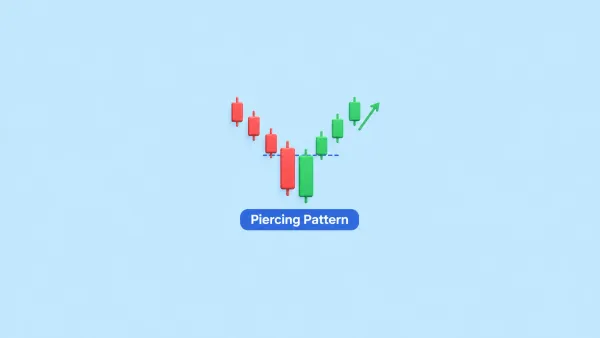
Understanding candlestick patterns can help traders study price movements and identify possible changes in market direction. One such pattern is the Piercing Pattern, which may signal a shift from selling pressure to buying pressure after a price decline. The pattern consists of two candles and is commonly used in technical analysis to identify a possible bullish reversal. However, it does not guarantee that prices will rise. Traders usually look for confirmation from the following candles, tr
14 October 2026
Made for Traders.
Trusted by Investors.
Download FinX — trade confidently, invest
smarter, track everything.

Table of Contents

- ELSS at a Glance
- What Is the ELSS Lock-In Period?
- SEBI's 2026 Update: ELSS Framework
- Why Does ELSS Have a 3 Year Lock-In Period?
- How to Invest in an ELSS Mutual Fund?
- Taxation Rules on ELSS Redemption (Updated After July 23, 2024)
- ELSS Withdrawal Rules After the Lock-In Ends
- Examples of ELSS Lock-In Period & Tax Calculations
- Conclusion
- FAQs