
The trading floor has moved from screens to code. Trading today isn’t just about intuition; it’s about intelligence, speed, and automation. As markets move faster than ever, traders who rely solely on manual decisions are getting left behind. That’s where algo trading steps in.
In this guide, you’ll learn what is algorithmic trading, how it works, the strategies professionals use, the risks you should know, and the latest SEBI rules shaping the future of automated trading in India.
What is Algo Trading?
Algo trading, short for algorithmic trading, is the process of using computer programs to automatically place trades based on a set of precise, predefined rules (the algorithm).
These rules can be based on price, technical indicators (RSI, MACD), time, volume, or statistical models. Once the conditions are met, the computer system executes the trades instantly, typically by sending the order instructions through a secure API (Application Programming Interface) provided by the broker or exchange, without manual intervention or delay.
In simple terms, algorithmic trading lets you automate your trading strategy so it becomes faster (executing trades in milliseconds), more disciplined, and emotion-free, allowing a trader to consistently monitor and trade multiple assets simultaneously.
How Does Algo Trading Work?
(You can add an infographic here - Algo Trading Workflow — Rule → Code → Scan → Execute → Optimise)
Algo trading works by converting a trading idea into a set of precise rules that a computer can follow automatically.
Here’s how algo trading works step-by-step:
- Create a Trading Rule: You define clear conditions, like price movements, indicators (e.g., RSI crosses a threshold), or time-based triggers.
- Convert the Rule Into an Algorithm: The logic is coded into software (using languages like Python) or built using a user-friendly no-code algo trading platform.
- Backtesting & Simulation (Crucial Step): The algorithm is rigorously tested against historical market data to assess its profitability, risk levels, and robustness before risking any real capital.
- Market Data Monitoring: The algorithm continuously scans real-time market data to check if the conditions match, typically connecting via a broker's API.
- Automatic Trade Execution: Once the conditions are met, the system instantly executes buy or sell orders through the exchange.
- Review, Optimise & Improve: Traders regularly analyse performance, adjust the strategy's logic, and deploy an improved version.
Why Is Algo Trading Becoming More Popular?
Algo trading is becoming more common because it helps traders make quicker and more reliable decisions, something manual trading struggles to achieve in today’s fast-moving markets. Automation gives traders a clear advantage in an environment where every millisecond counts.
Here’s why more people are turning to algorithmic trading:
1. Speed & Efficiency: Algorithms can scan huge amounts of market data and place trades almost instantly. This allows traders to grab opportunities that would disappear long before a human could react.
2. Freedom From Emotions: Since algorithms follow a fixed set of rules, they don’t get affected by fear, greed, or overthinking. This leads to more disciplined and consistent trading.
3. Easy Access for Beginners: Many modern algo trading platforms now offer “no-code” tools, making it easy to automate strategies without needing programming knowledge. This has opened the door for everyday traders to use automation.
4. Ability to Scale Up: Algos can run multiple strategies at the same time and across different markets, stocks, futures & options, and more. A single trader can manage far more trades than would ever be possible manually.
5. Lower Trading Costs: Because algorithms execute orders more efficiently and can split large trades into smaller parts, traders often end up paying less in overall transaction costs.
6. Backtesting Before You Risk Money: Algo trading lets you test a strategy on years of past market data. This helps traders understand whether their idea works before using real money.
Types of Algorithmic Trading
Algo trading can be done in many ways depending on the trader’s goals, market style, and risk appetite. Here are the most common types, explained simply:
1. Trend-Following Strategies:
These strategies try to ride the market’s direction, up or down. They use tools like moving averages or breakout levels to identify when a trend starts and place trades accordingly. Since they rely on price action rather than predictions, they’re very popular with beginners.
2. Mean Reversion Strategies:
This approach is based on the idea that prices move too far in one direction and eventually return to their “average.” The algorithm looks for times when an asset is overpriced or underpriced and trades expecting it to move back toward the mean.
3. Arbitrage Algorithms:
Arbitrage strategies take advantage of small price differences between markets or exchanges. For example, if a stock is cheaper on one platform and slightly higher on another, the algo buys low and sells high instantly to lock in risk-free profit.
4. Market-Making Strategies:
Market makers place buy and sell orders at different price levels to earn from the small price difference (the spread). Algos help them update these orders quickly as prices change, making it easier to stay competitive.
5. Statistical Arbitrage (Stat Arb):
This is a more advanced type that uses mathematical models, correlations, and probabilities. The algorithm identifies patterns or relationships between assets and trades when those patterns temporarily break.
6. High-Frequency Trading (HFT):
HFT involves extremely fast trades, often in microseconds. These strategies require powerful servers and sophisticated infrastructure, so they’re mostly used by institutions rather than retail traders.
7. Options & Forex-Based Algorithms:
These algos use specific tools like volatility models, option Greeks (Delta, Theta, Vega), or currency indicators. They help traders automate complex setups in options and forex markets, which are difficult to manage manually.
8. Execution Algorithms (VWAP/TWAP):
These algorithms are not designed to decide when to trade for profit, but rather how to trade a large order to minimise market impact and get the best average price.
- VWAP (Volume-Weighted Average Price): The algo splits a large order into smaller pieces and releases them throughout the day to match the historical volume profile.
- TWAP (Time-Weighted Average Price): The algo splits the order into equal-sized pieces and executes them at regular time intervals.
Risks of Algorithmic Trading
While algo trading offers speed and efficiency, it also comes with risks that every trader, especially beginners, should understand. Automation doesn’t remove risk; it only changes the type of risk you deal with.
1. Technical Failures:
Algorithms depend on a stable internet, broker servers, market data feeds, and your device. If any part fails, like an internet drop or a system freeze, the algo may misfire, place incorrect orders, or stop working unexpectedly.
2. Sudden Market Volatility:
Algorithms follow rules strictly. In extremely volatile conditions, prices can move so quickly that your strategy might not react as expected, leading to losses much faster than manual trading.
3. Over-Optimisation (Curve Fitting):
This is one of the biggest beginner mistakes. A strategy may look perfect on historical charts because it’s overly tuned to past price movements. But when used in real markets, it fails because it was designed around noise, not real, repeatable patterns.
4. Lack of Human Judgment:
Algorithms don’t understand news, sentiment, or unexpected events. For example, during major announcements or global shocks, the market can behave unpredictably, while the algo keeps following its rules blindly.
5. Execution Risks:
Even if your strategy is correct, issues like slippage, delays, or partial fills can impact results. Fast markets can cause your entry or exit price to be very different from what the algo expected.
6. Regulatory Restrictions:
Newer SEBI rules require all algos to run through broker-approved systems and follow strict risk controls. Brokers must also ensure a mandatory "Kill Switch" is in place. This safety feature allows the system to instantly halt all automated orders if the strategy exceeds pre-set loss or volume limits, preventing runaway losses. If traders misuse APIs or deploy unapproved algos, they may face penalties or blocked execution.
7. High Competition:
In widely used strategies, especially intraday or high-speed setups, many traders use similar algorithms. This can reduce profitability because everyone is trying to capitalise on the same opportunity.
Best Algo Trading Strategies in India
Here are some of the most reliable and widely used strategies you’ll find on popular algo trading platforms:
1. Moving Average Crossover Strategy:
One of the simplest and most effective strategies for beginners. It uses two moving averages, one fast and one slow.
- Buy Signal: When the fast MA crosses above the slow MA
- Sell Signal: When the fast MA crosses below the slow MA
This method helps traders capture trends early without needing complex analysis. (Note: The effectiveness depends heavily on the chosen timeframe and MA periods, e.g., 50-day and 200-day for long-term, or 9-period and 21-period for intraday.)
2. RSI Momentum Strategy:
The Relative Strength Index (RSI) helps identify overbought and oversold zones.
- Buy Signal: RSI falls below 30 and then rises
- Sell Signal: RSI rises above 70 and then drops
This is great for forex, indices, and stocks where momentum shifts frequently. (Note: While 30/70 is standard, advanced traders often adjust these levels based on the asset's volatility.)
3. Mean Reversion Strategy:
This strategy works on the assumption that prices eventually come back to their average. Examples include:
- Bollinger Band reversal setups
- Price touching a moving average after deviating sharply
It performs well in sideways or range-bound markets.
4. Breakout Strategy:
This strategy focuses on strong movements that happen when the price breaks key support or resistance levels.
Algos identify:
- Range breakouts
- High-volume breakouts
- Opening range breakouts
Great for intraday trades in Nifty, Bank Nifty, and liquid stocks.
5. Options Greeks–Based Strategies:
Widely used in India because of the popularity of Bank Nifty and Nifty options.
Algorithms can automate:
- Delta-neutral strategies
- Iron condors
- Credit spreads
- Straddles and strangles
- Volatility-based setups
The algo adjusts positions based on changes in Greeks like Delta, Theta, and Vega.
6. Pair Trading (Statistical Arbitrage):
This strategy picks two correlated stocks, like HDFC Bank and ICICI Bank. When the price gap widens beyond normal, the algo:
- Buys the undervalued stock
- Sells the overvalued one
When the prices converge, the position closes with a profit.
7. VWAP or Volume-Based Strategies:
VWAP helps identify the average price at which most trading happens.
Algos use VWAP to:
- Enter trades when the price moves above/below the VWAP
- Build intraday mean-reversion or trend setups based on volume flow
Popular among intraday traders and institutions.
8. News or Event-Based Strategies (Advanced):
Algos react instantly to scheduled events like:
- RBI policy announcements
- Company earnings
- Economic data releases
While advanced, they are highly effective for high-volatility environments.
9. Candlestick/Price Action Pattern Strategies:
These algorithms automate the recognition of specific chart patterns that indicate a potential reversal or continuation.
- Examples: Identifying and trading patterns like Engulfing Candlesticks, Doji reversals, or Pin bars.
- Application: These are highly effective for capturing short-term moves in liquid stocks and indices, offering a clean, non-indicator-based approach to automation.
SEBI’s Updated Framework for Algo Trading
SEBI has strengthened rules to make algo trading safer, more transparent, and traceable, especially for retail traders.
1. Mandatory Hosting via Broker Infrastructure (Banning Open APIs):
All retail algorithms must be deployed and executed only through the broker’s infrastructure. This ensures end-to-end control and accountability.
This means: Open APIs are prohibited. Third-party APIs cannot directly place automated trades unless fully integrated, whitelisted (via static IP), and exchange-approved. The broker acts as the principal.
2. Mandatory Algo Approval & Registration:
Every algorithm, whether developed by a vendor or a client, must be approved and registered with the exchange/broker before live use.
Self-Developed Algos: Tech-savvy retail investors who develop their own algos must register them with the exchange (via their broker) only if their order frequency exceeds a specified threshold (initially set at 10 orders per second).
3. Classification of Algorithms:
Algos are now formally categorised to ensure appropriate disclosure and monitoring:
- White Box Algos: Strategies with transparent, replicable, and disclosed logic (e.g., Execution Algos).
- Black Box Algos: Strategies with proprietary, undisclosed logic. Providers of these must register as a SEBI Research Analyst (RA) and maintain detailed research reports.
4. Unique Algo ID Tagging:
Every single order generated by an algorithm must be tagged with a unique Algo ID provided by the exchange. This creates a full audit trail, allowing regulators and exchanges to track the behaviour of every strategy in real-time.
5. Broker-Level Real-Time Risk Controls:
Brokers must enforce robust, real-time safety mechanisms on the algo system:
- Order Throttle Limits: Limits the number of orders per second/minute.
- Price Deviation Limits: Prevents execution at wildly incorrect prices.
- Margin and Position Checks.
- Stronger Authentication: Mandatory use of OAuth and Two-Factor Authentication (2FA) for API access.
6. Mandatory ‘Kill Switch’ (The Last Line of Defence):
The exchange and broker must both have the ability to use an emergency kill switch to instantly stop all automated orders for a client or a specific malfunctioning Algo ID if pre-set loss limits are breached, or the algo misbehaves.
Conclusion
Algo trading is reshaping how markets work. It offers speed, discipline, and powerful automation, making it ideal for modern traders. But for beginners, the first step is safety.
Before going live, always start with Paper Trading (Virtual Trading). This lets you test your algorithms with real-time data, without risking money. Once you’re comfortable, choose a reliable, SEBI-compliant algo trading platform, use proven strategies, and continue optimising your approach.
Related Blog


Nifty Prediction For Tomorrow Indian equities witnessed a strong bullish session, with the Nifty closing at 22,997.35, up 374.65 points (+1.66%). The index opened higher by around 48 points from the previous close and touched an intraday low of 22,637.40 during the opening minutes, before witnessing a sharp upside rally. Strong buying momentum lifted the index to an intraday high of 23,056.40, followed by mild profit booking before it closed at 22,997.35. The session reflected a notable improve
14 October 2026
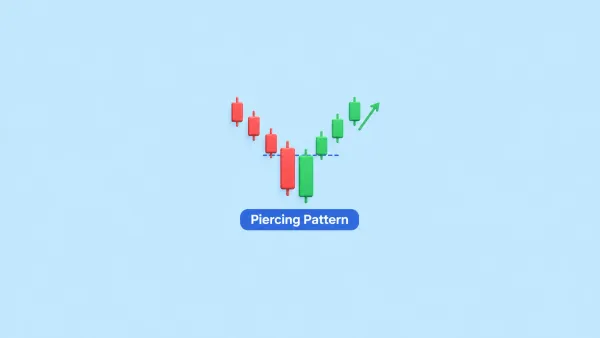
Understanding candlestick patterns can help traders study price movements and identify possible changes in market direction. One such pattern is the Piercing Pattern, which may signal a shift from selling pressure to buying pressure after a price decline. The pattern consists of two candles and is commonly used in technical analysis to identify a possible bullish reversal. However, it does not guarantee that prices will rise. Traders usually look for confirmation from the following candles, tr
14 October 2026
Key Takeaways * An ETF holds a basket of securities and trades on a stock exchange like a share. * Most ETFs in India are passively managed — they aim to copy an index, a commodity like gold or another benchmark, rather than try to beat it. * Returns can differ a little from the benchmark, because of expenses, cash holdings, transaction costs, portfolio adjustments and the fund’s replication method. * You need a demat and trading account to buy and sell ETF units. * ETFs are generally low-
13 October 2026
Made for Traders.
Trusted by Investors.
Download FinX — trade confidently, invest
smarter, track everything.