
Option trading in India has grown rapidly with the rise of retail participation in future & options segments, such as NIFTY, BANK NIFTY, FINNIFTY, and stock derivatives. While options offer flexibility and leverage, they are also sensitive to time decay, volatility, and sudden price moves, especially during weekly expiry.
This is why traders rely on technical indicators. The best indicator for option trading helps you understand market direction, momentum, volatility, and sentiment. However, no indicator works in isolation. The real edge comes from knowing which indicator is best for trading in a given market condition and how to apply it practically using a disciplined trading account.
This guide explains the best indicators for option trading in India.
Best Indicator for Option Trading
Instead of chasing too many tools, focus on a few reliable option trading indicators that match Indian index behaviour and liquidity.
1. Moving Averages (EMA – Trend Confirmation Tool):
Indicator Type: Lagging Indicator
Best for: Trend-following option buyers
Moving Averages are often the first indicator that traders learn. While they don’t predict price, they confirm trend direction.
What to look for on the chart:
- Use 20 EMA and 50 EMA
- Look for a Golden Cross (20 EMA crossing above 50 EMA) → Bullish
- Look for a Death Cross (20 EMA crossing below 50 EMA) → Bearish
Example: If BANK NIFTY on a 5-minute chart shows a Golden Cross after market open, traders may consider buying ATM or slightly OTM call options, especially on non-expiry days.
Pro tip: Moving averages work best when combined with a leading indicator like RSI to avoid late entries.
2. Relative Strength Index:
Indicator Type: Leading Indicator
Best for: Intraday and breakout trades
RSI is one of the best indicators for intraday option trading because it signals momentum before price moves.
What to look for on the chart:
- Instead of 70/30, many Indian traders use the 60–40 rule
- RSI above 60 → Strong bullish momentum
- RSI below 40 → Strong bearish momentum
Example: If NIFTY breaks a resistance level and RSI sustains above 60, traders may look for call buying opportunities during the day.
Why it works in India: RSI adapts well to fast-moving index options and helps avoid false reversals during trending markets.
3. Bollinger Bands:
Indicator Type: Volatility-based
Best for: Range-bound and breakout markets
Bollinger Bands expand and contract based on market volatility, critical for options pricing.
What to look for on the chart:
- Band contraction (squeeze) → Big move likely
- Price hugging the upper band → Strong bullish trend
- Price hugging lower band → Strong bearish trend
Example: Before major events or expiry, NIFTY often shows a Bollinger squeeze. Traders prepare for a directional move using directional options or non-directional strategies.
4. Volume & Open Interest:
Indicator Type: Confirmation & Sentiment
Best for: Index and stock options
Volume and OI are essential in the Future & option market because they show who is building positions.
What to look for on the chart/data:
Price ↑ + OI ↑ → Long Build-up
Price ↓ + OI ↑ → Short Build-up
Price ↑ + OI ↓ → Short Covering
Price ↓ + OI ↓ → Long Unwinding
Example: If NIFTY is rising and the call option OI is falling, it often indicates short covering, supporting further upside.
This is why OI analysis is frequently discussed on channels like CNBC Awaaz or Zee Business.
5. VWAP (Volume-Weighted Average Price):
Indicator Type: Intraday benchmark
Best for: Bank Nifty & NIFTY intraday options
VWAP shows the average traded price weighted by volume and is heavily used by institutions.
What to look for on the chart:
- Price above VWAP → Bullish bias
- Price below VWAP → Bearish bias
Example: VWAP works exceptionally well on 5-minute or 15-minute charts for BANK NIFTY. Traders often buy call options only when the price sustains above VWAP with volume confirmation.
6. India VIX (Volatility Index):
Indicator Type: Volatility gauge
Best for: Deciding between buying and selling
You cannot talk about the best indicator for option trading in India without mentioning India VIX.
How to use it practically:
- High VIX → Options are expensive → Better for option sellers
- Low VIX → Options are cheap → Better for option buyers
Example: If VIX is below 12, option buying strategies tend to perform better. Above 18–20, premium-selling strategies often have an edge.
7. Put-Call Ratio:
Indicator Type: Sentiment indicator
Best for: Index options
PCR compares Put OI to Call OI and reflects crowd sentiment.
Key levels used by Indian traders:
- PCR above 1.3 → Market may be overbought
- PCR below 0.7 → Market may be oversold
PCR works best when combined with price action and OI analysis.
Lagging vs Leading Indicators
- Leading indicators (RSI, PCR) try to predict price moves
- Lagging indicators (Moving Averages, VWAP) confirm trends
Understanding this prevents frustration and unrealistic expectations.
Conclusion
No best stock market indicator guarantees profits. The real answer to which is the best indicator for option trading depends on market conditions, volatility, and your trading style.
For most Indian traders:
- Use RSI (leading) + EMA or VWAP (lagging)
- Add OI/PCR for confirmation
- Check India VIX before choosing buying or selling strategies
Avoid indicator overload. Using more than 2–3 indicators often leads to analysis paralysis. Consistency, risk management, and discipline matter more than chasing the “perfect” indicator.
FAQs
1. Why are indicators important in options trading?
Indicators help traders analyse trends, momentum, volatility, and sentiment. In options trading, where timing is crucial, they reduce emotional decisions and improve consistency.
2. Are options trading indicators 100% accurate?
No. Indicators are probability tools, not guarantees. They work best when combined with price action and proper risk management.
3. What is the most successful trading indicator?
There is no single most successful indicator. RSI, VWAP, and OI analysis are among the most trusted in the Indian market when used correctly.
4. Which indicator has the highest win rate?
Win rate depends on strategy and discipline, not just indicators. Traders who combine 2–3 indicators logically tend to achieve better results.
5. Which indicator is best for option trading?
Accuracy improves when indicators are used together, for example, RSI for entry timing and EMA or VWAP for trend confirmation.
6. How can I combine multiple indicators for better options trading signals?
A simple and effective combination:
EMA or VWAP → Identify trend
RSI → Time the entry
OI/PCR → Confirm sentiment
India VIX → Decide buying vs selling
This balanced approach works well for both index and stock options in India.
Disclaimer: This blog is for educational purposes only. It does not constitute investment advice or a recommendation to trade. Options trading carries significant risk; consult a financial advisor before making decisions.
Related Blog


Nifty Prediction For Tomorrow Indian equities remained under pressure on 21 October, with the Nifty closing at 22,811.35, down 77.60 points (-0.34%), marking its second consecutive session of decline. The index opened higher at 23,016, a gap-up of around 127 points, and initially advanced to an intraday high of 23,120.90 within the first half-hour. However, selling pressure emerged soon after the early rise and dragged the index down to an intraday low of 22,649.90. A late recovery helped the i
20 October 2026

The overall month has been quite unpredictable. While many on the chart stood strong, most of them have slipped. Bank Nifty on the other hand maintained its grip for a long time but now appears slightly bearish. Let’s see what the coming month holds for the investors as Mr. Sumeet Bagadia, Executive Director of Choice takes us through the weekly predictions of the market. Nifty Prediction For Next Week (19th October - 23th October 2026) The Nifty index started the week at 22,593.20, opening a
16 October 2026
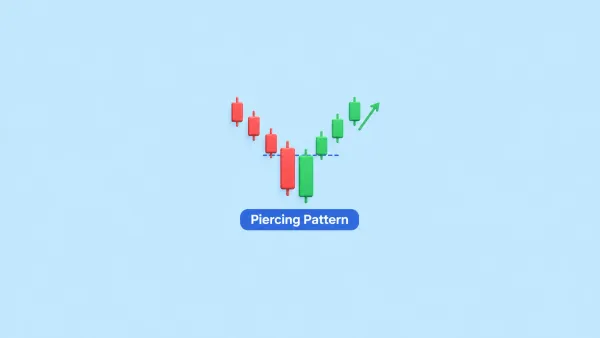
Understanding candlestick patterns can help traders study price movements and identify possible changes in market direction. One such pattern is the Piercing Pattern, which may signal a shift from selling pressure to buying pressure after a price decline. The pattern consists of two candles and is commonly used in technical analysis to identify a possible bullish reversal. However, it does not guarantee that prices will rise. Traders usually look for confirmation from the following candles, tr
14 October 2026
Made for Traders.
Trusted by Investors.
Download FinX — trade confidently, invest
smarter, track everything.