
A Demat account plays a vital role in today’s investor-friendly world, offering a safe and efficient way to store and manage your investments. Many individuals often wonder - “How to use a Demat account? Whether you are interested in stocks, IPO, or mutual funds, a Demat account is a must-have tool.
This guide will explain the uses of a demat account, how to use it, and key considerations before starting your investment journey.
About Demat Account
A Dematerialised (Demat) account is an electronic account used to digitally hold securities like stocks, bonds, ETFs, and mutual funds. It eliminates the need for physical share certificates and reduces paperwork, which in turn mitigates the risk of loss and damage.
When you open a Demat account, you link it with a trading account to execute buying and selling transactions in the stock market. The seamless conversion of securities into electronic format makes managing investments more straightforward and efficient.
How To Use A Demat Account Effectively For Trading?
Let’s understand how to use a Demat account effectively to start trading in the stock market:
- Open your Demat Account (If you don’t have one): If you are a beginner or new to investing, open a Demat account with a reliable Depository Participant (DP).
- Link Your Trading and Bank Account: For seamless transactions of securities and funds, you need to connect your trading and bank account to your Demat account.
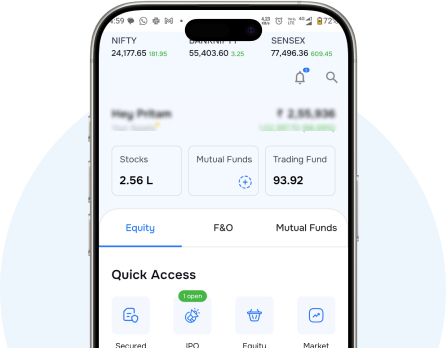
- Use Trading Platform: Opening a Demat account allows you to access a comprehensive trading platform provided by your DP. You can use it to execute orders and monitor your investments effortlessly.
- Place Orders: Research, analyse, and decide which potential securities you want to trade or invest in. Place your orders, and once the order is executed, the securities will be reflected in your Demat account.
- Monitor Your Portfolio: You can use your Demat account to keep track of your investments for effective management.
Whether investing in stocks, mutual funds, or IPOs, a well-utilised Demat account is your gateway to financial growth and security.
Why Do You Need A Demat Account? - Uses:
A Demat account is an essential tool for investors, offering several advantages that make it indispensable in the modern financial landscape. Let’s understand what is the use of a Demat account:
Holding Securities:
A Demat account stores shares, bonds, mutual funds, government securities, ETFs, and other financial instruments electronically.
Facilitating Transactions:
One of the important uses of a Demat account is the seamless buying, selling, and transferring of securities. Shares are credited or debited directly to/from the Demat account during transactions.
Reducing Paperwork:
A Demat account eliminates the need for physical share certificates as it holds securities in digital format. This reduces the risks of theft, loss, or damage.
Convenience:
Demat accounts allow easy access and management of investments via online platforms and mobile apps. The account helps to facilitate the monitoring of portfolio performance in real time.
Mandatory for Stock Market Investments:
A Demat account is essential for trading in shares or stock exchanges like NSE or BSE in India. It works alongside a trading account to execute transactions.
Charges Associated With Using A Demat Account
Now that we have a clear understanding of how to use a Demat account, let’s understand the associated costs:
- Account Opening Fees: Many DPs waive this fee, but some charge a nominal amount.
- Annual Maintenance Charges (AMC): Regular fees for maintaining your account, ranging from ₹300 to ₹500.
- Transaction Fees: Fees for buying or selling securities.
- Custodian Charges: For holding securities in the account. They can potentially be included in the AMC.
Be sure to compare charges across multiple DPs before deciding where to open your account.
Important Terms Associated With A Demat Account
- Depository: Organisations like NSDL and CDSL provide the infrastructure for holding securities electronically.
- Beneficiary Owner ID (BO ID): A unique identifier for your Demat account, used for transactions and communications with your DP.
- ISIN (International Securities Identification Number): A unique code assigned to every security for seamless tracking and trading.
- Power of Attorney (POA): A legal document authorising your DP or broker to operate your Demat and trading accounts on your behalf.
- Freeze and Unfreeze: The freeze feature in a Demat account allows you to lock your account or specific securities to prevent unauthorised transactions.
Conclusion
Opening a Demat account is mandatory for anyone looking to invest in stocks, mutual funds, or participate in IPOs. It simplifies the investing process, offering convenience, security, and efficiency. Whether you're a beginner or a seasoned investor, understanding how to use a Demat account is key to maximising your returns in the financial markets.
Take the first step towards investing, open a Demat account today, and unlock the potential of a well-organised and diversified portfolio!
Frequently Asked Questions (FAQs):
What is the Difference Between a Demat and a Trading Account?
A Demat account holds your securities in electronic form, while a trading account is used to execute buy and sell orders on the stock market. Both are interconnected for a smooth trading experience.
Can I Have Multiple Demat Accounts?
Yes, you can open multiple Demat accounts with different DPs. However, ensure compliance with regulations and proper management to avoid unnecessary charges.
Is it mandatory to have a Demat account for stock trading?
Yes, if you want to trade in stocks listed on exchanges like NSE or BSE, a Demat account is mandatory.
Can I open a Demat account without a trading account?
Yes, you can open a Demat account independently if you only want to hold securities like mutual funds or IPO shares. However, a trading account is essential if you plan to buy or sell stocks.
What happens if I don’t use my Demat account?
If unused for a prolonged period, your Demat account may be marked dormant. You will need to reactivate it by completing the formalities with your DP. Note that annual charges will still apply.
Related Blog

"Growth becomes more resilient when every capability strengthens the ecosystem around it.” For Choice International Limited, this philosophy increasingly defines its evolution. With broking at the core of its journey, Choice has steadily built a broader financial services ecosystem spanning wealth management, lending, investment banking, institutional equities and advisory services creating multiple avenues to engage with and serve its growing client base. Capitalising on these emerging opport
31 August 2026

The overall month has been quite unpredictable. While many on the chart stood strong, most of them have slipped. Bank Nifty on the other hand maintained its grip for a long time but now appears slightly bearish. Let’s see what the coming month holds for the investors as Mr. Sumeet Bagadia, Executive Director of Choice takes us through the weekly predictions of the market. Nifty Prediction For Next Week (24th August - 28th August 2026) The Nifty 50 witnessed a volatile week, with selling press
21 August 2026

Prism, the parent company of global travel-tech unicorn OYO, has moved closer to its proposed stock market debut after receiving clearance from the Securities and Exchange Board of India (SEBI), filing its Updated Draft Red Herring Prospectus (UDRHP), and beginning its roadshow for a proposed ₹6,650 crore initial public offering (IPO). The company, which is led by Ritesh Agarwal, has started meeting institutional investors as it prepares for its public-market debut later this year. The proposed
21 August 2026
Made for Traders.
Trusted by Investors.
Download FinX — trade confidently, invest
smarter, track everything.